



It’s usually at the end of the year that you’ll notice lots and lots of articles offering money savings tips. But with the New Year only four months away, putting your tax planning hat on now is a smart financial move as well as a good investment of your time. Similar to investment planning, tax planning is pro-active and has the potential to lower your overall tax bill.

Is it just me, or does it seem that lately there are an abundance of investment professionals that have suddenly been gifted with a crystal ball? Why do I say that? Because every time I turn around there seems to be another “expert” predicting where the economy will be two, four, ten years from now, where the stock or bond market will be or where the price of gold, other precious metals, wheat or oil will be in the future. How can so many so called “experts” have such a diverse set of predictions? The answer is simple-being quoted with a prediction is good for business. So please…take these predictions with a heavy dose of salt.
Before I go much further, let me distinguish between those seeking press for the sake of boosting their business vs. the investment professionals that are truly adding value and knowledge to the community of interested and financially intelligent investors.
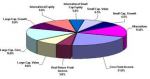
A chef would tell you that it is very important to have the right balance of ingredients while preparing a meal. An incorrect proportion or combination of spices can result in a disastrous attack on the taste buds. Creating an investment portfolio is like preparing an entrée. Each investment vehicle placed in the portfolio is like an ingredient for an entrée. The proportions of securities used to build the portfolio will define its expected risk and return.
Asset allocation and portfolio diversification are both techniques used to identify the right combination of securities to put into a portfolio. Asset allocation identifies the asset class proportions while portfolio diversification suggests the correct mix of securities within the asset classes. However, just like an entrée should be created considering the taste preferences of the person eating it, a portfolio’s diversification and asset allocation methods should be suitable to the investor’s needs.
As someone that majored in tax accounting during college, it always amazed me how President Reagan and the majority of the Republican’s were able to sell the concept of trickle-down economics to the American people. Yes it was the 80’s and by the mid to late 80’s the economy started to really take off. But then as now, most of the benefits accrued to the wealthiest in our society. Even the first President Bush labeled it voodoo economics.
If you’re a believer in supply side macro-economic theory, then you believe that lowering tax rates on the wealthy is the engine that will drive economic growth and prosperity. If all goes according to plan, money will “trickle” down to the less affluent and all will be well. I couldn’t disagree with this more. Exhibit A-President George W. Bush who was a huge proponent of this economic theory.

In the past couple months, as the stock market continued its swan dive, I met quite a few potential clients that are literally worrying themselves sick over money. When I inquired about their overall health, many of these same clients that are worrying a lot about their money have also encountered lower back pain, in some cases, pretty severe back pain. It’s a common belief that much of our worry around money manifests physically as lower back pain.
It’s obvious yet important to remember that worry and stress are not things we catch like a cold or a bug. It’s our thoughts that create stress and anxiety and its stress that often can lead to illness.

I just received a link to an inspiring article by Liz Pulliam Weston of MSN Money that describes 3 people, ages, 25, 44 and 60, all college educated and following their dreams, who have taken frugality to a whole new level. These three are masters of budgeting, saving money and investing for their futures all while keeping their eyes on the ball and enjoying the life they choose to live - in all cases one of simplicity and freedom. They are all happy with their choices and excited about their futures.
Although from all different walks of life, the one thing these three had in common was cheap housing, cheap transportation and cheap thrills.